What RF Skin Tightening Can and Cannot Do
If you have been looking into skin tightening, you have probably seen several treatments advertised, and the names start to blur. Ultrasound, lasers, needles, creams, surgery. Is RF the same thing? Is it better? Is it worth the money?
I can only answer properly for RF, which I offer in my treatment room in Kirkham. So this is not a league table, and I am not going to tell you RF beats anything. It is what RF can and cannot do, written plainly, followed by a general map of the other routes, so you know which conversation to have and with whom.
What RF can do
RF is controlled heat. A handpiece passes radio frequency energy through the surface of the skin into the layer underneath and warms it to a precise, comfortable temperature. That heat prompts the skin to respond, and over the weeks that follow, treated skin can look firmer and smoother, and loose or crepey areas look softer.
In practical terms, RF can:
- Help skin that has started to loosen look firmer, on the face and neck, along the jawline, on the tummy and thighs, on the backs of the arms and above the knees.
- Fit into a normal week. Nothing pierces the skin, there is no recovery time, and there is a short list of things to avoid for 48 hours afterwards.
- Change things gradually. The change comes from your own skin’s response over a course, so it appears over weeks rather than overnight.
RF works best on skin showing early signs of loosening: the softer edge along the jaw, the neck, a tummy that stayed a little loose after children, arms that have started to soften. That is where I think it is worth your money.
What RF cannot do
This part matters just as much, and it is the part brochures tend to skip.
- RF is not a facelift and not a replacement for surgery. It does not take away loose skin. Where there is a lot of loose skin, RF does less, and I would rather say so before you book a course.
- It does not work in one session. A single session warms the skin, and warmth is not firmness. I plan RF as a course of four to six treatments, seven to ten days apart, with a review after the fourth.
- It does not stop your skin ageing. Your skin keeps changing after the course, which is why I usually suggest a maintenance treatment every six weeks once the course ends. I do not describe RF results as lasting forever, because they do not.
- It does not reduce fat. RF works on the skin. A pocket of fat underneath is a different question with different treatments.
- It does not come with a guarantee or a percentage. Results vary between individuals and depend on age, skin condition, lifestyle and how loose the skin was to begin with.
The other options, in general terms
I describe the routes below only in broad terms, and I will not compare their results with RF. If one of them interests you, the clinic or doctor who offers it is the right person to ask. The groupings follow the American Academy of Dermatology’s guide to firming loose skin, and the NHS pages on cosmetic surgery.
Skincare at home. Creams and serums are where most people start. The American Academy of Dermatology says a cream cannot reach deep enough to lift loose skin, although a good moisturiser can make fine lines look less noticeable for a while. I still think home care matters a great deal for how healthy your skin is. It is simply a different job from tightening.
Other non-invasive energy treatments. Like RF, these leave the skin surface intact and use energy to heat the deeper layers. Focused ultrasound, often called HIFU, and some lasers sit in this group. They work in a different way from RF, and I do not offer them.
Minimally invasive treatments. These go beneath the surface on purpose, for example radio frequency delivered through fine needles or a thin tube placed under the skin, or laser resurfacing. They usually involve some downtime, and I do not offer them.
Surgery. Surgery is the route that physically takes away excess skin. The NHS describes a tummy tuck, for example, as cosmetic surgery for excess loose skin on the tummy, including skin left after pregnancy or after losing a lot of weight. It is major surgery, with a recovery period, risks and a scar, and it is a decision to make with a surgeon.
Which conversation do you need?
A few honest questions usually sort it out.
- How much loose skin is there? Early softening, where the skin feels looser than it looks in your head, is where RF fits. A lot of loose skin is worth discussing with a doctor before you spend money on any non-surgical course, mine included.
- Is it skin or fat? If what bothers you is mostly a soft pocket underneath, RF is not the first step.
- How much downtime can you take? RF has almost none. Anything that breaks the skin on purpose, and any surgery, asks more of you afterwards.
- Is RF suitable for you at all? Pregnancy, a pacemaker, metal implants and some health conditions rule it out. The full list is on my RF skin tightening page, and I check it with you on your form before any treatment.
If you are still not sure, that is what the form and the short talk at the start of the appointment are for. I look at the area with you and tell you what I honestly expect, including when the answer is that RF is the wrong tool or that it is too early to bother.
What RF looks like in my treatment room
For the practical side: one area takes 45 minutes and costs £65. One area means the full face and neck, the backs of the arms, or above the knees. The tummy or thighs count as two areas: 90 minutes, £130. A course is four to six treatments, seven to ten days apart.
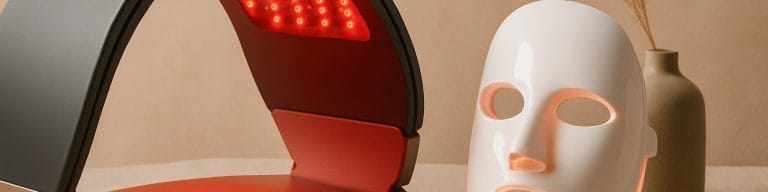
After you book, I send you a short form, and on the day about five minutes of talking it through comes before the treatment. Each session includes a cleanse, a light enzyme peel if the skin needs one, actives, the RF itself, and cream with SPF to finish. Optional add-ons, booked in advance, are LED light therapy (£20), a cooling and hydrating algae mask (£20), a nourishing mask (£25), and pressotherapy (£20) with body RF.
Clients come to me in Kirkham from Preston, Lytham St Annes and across the Fylde Coast. Full prices and booking are on my RF skin tightening in Kirkham page, and if you want the longer answer to whether RF works at all, it is in Does RF skin tightening work?
Questions & Answers
Not sure if your skin is the right skin?
Book your first session. After booking I send you a short form, and on the day I look at the area with you and tell you honestly what I expect, including if it is too early to bother. Prices, preparation and the case study places are on my RF skin tightening in Kirkham page.
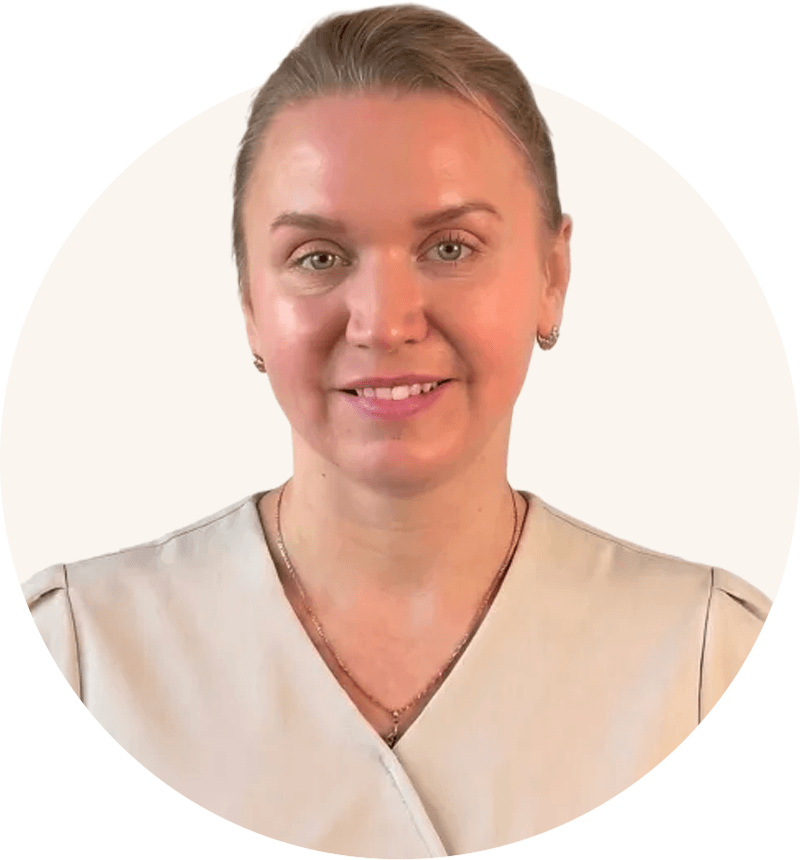
All treatments carried out by Maria at Skincare & Waxing, 10A Freckleton Street, Kirkham, Preston, PR4 2SP