Does RF skin tightening work?
Yes, on the right skin. Radio frequency skin tightening rewards skin that has started to loosen and disappoints on skin that needs surgery. Here is how I tell the two apart in my Kirkham treatment room, how many sessions it really takes, and what I will not promise.
Does RF skin tightening work? Yes, on the right skin. On the wrong skin it is money spent on a short-lived glow, and I would rather you knew which one you have before you book anything.
I offer radio frequency skin tightening in my treatment room in Kirkham, and this is the conversation I have at every consultation. It is written down here so you can read it without booking first.
What radio frequency actually does to your skin
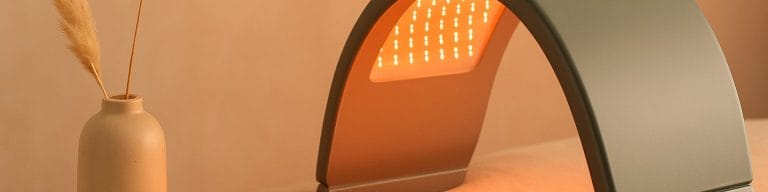
Radio frequency (RF) is controlled heat. A handpiece passes energy through the surface of the skin into the layer underneath, where collagen and elastin sit, and warms that layer to a precise temperature. The surface itself is kept within a controlled temperature window the whole time. The professional system I use works at 250 kHz and reaches 3 to 4.5 millimetres down.
The heat is the treatment. It prompts the skin to respond, and that response is what makes treated skin look firmer and smoother over the weeks that follow. Nothing pierces the skin. No needles and nothing to peel afterwards.
The Cleveland Clinic describes the mechanism the same way: low-frequency energy generating heat in the deeper layers, which the skin responds to over the following months. Their page also says something most brochures leave out, and I will come back to it.
Does RF skin tightening work on every skin?
That missing line is this: RF is most effective on skin showing early signs of loosening, and less effective on severely sagging skin. I agree with it, and I would say it to your face.
Skin that has started to feel looser than it looks in your head responds well. The soft edge along the jaw. The neck that photographs older than the face. A tummy that stayed a little loose after children even though the weight went. The backs of the arms that have thinned. That is the skin RF was designed for.
Skin with a lot of laxity is a different conversation. The treatment can still improve how it looks, but it will not do what surgery does, and I will not pretend otherwise to fill a course.
If you are not sure which you are, that is what the consultation is for. I look at the skin, we agree the area, and I tell you what I honestly expect. Sometimes the answer is that it is too early to bother. Sometimes it is that a different treatment fits better.
Why one session proves nothing
One RF session warms the skin, and warmth is not firmness. If you judge RF by a single session you will be disappointed, or impressed by something that does not last.
The real change is built by the skin, session after session, and it takes weeks to show. The Cleveland Clinic puts the typical range at two to six treatments, with changes appearing over two to six months, and results that may last one to three years with good skincare. I plan RF as a course of four to six, seven to ten days apart, and I review your skin with you after the fourth. Some skin gets there in four. Some benefits from one or two more. Nobody is booked for six by default.
After the course, maintenance treatments may be recommended. Whether you need them, and how often, depends on your skin and how you live, so I will tell you rather than sell you a plan.
What a session feels like
Deep, spreading warmth. It builds slowly because I work in passes and check the skin temperature as I go, so there is no moment where it suddenly gets hot. If it ever feels too warm you say so and I turn it down. It is meant to feel comfortable, not something to get through.
A session lasts 45 minutes and covers one area: the full face and neck, say, or the back of the arms. Larger areas such as the tummy or thighs count as two. The radio frequency sits inside a proper treatment: I cleanse, do a light enzyme peel if the skin needs it, apply actives, then the RF itself, and I finish with cream and SPF.
Afterwards expect some redness or slight swelling, which usually settles within 24 hours. For 48 hours skip the sauna, the pool, hard exercise, tea, coffee and alcohol, and drink more water than usual. Then carry on with your day.
Who should not have RF
RF is not for everyone, and the reasons have nothing to do with how your skin looks.
It is not suitable during pregnancy or straight after it, with a pacemaker or serious heart disease, with metal implants, pins, an artificial hip or dental plates, during cancer treatment, with an autoimmune condition or immunosuppressant medication, or with a connective tissue disease such as lupus or scleroderma. I do not treat over open wounds, skin infections, unhealed surgery or a recent break in the area.
Timing matters too. Peels, dermabrasion, dermaplaning and laser all need a gap before RF, and I confirm the length of that gap at consultation. Botox needs at least 14 days after the last injection, fillers at least a month and no discomfort left in the area. Recent microneedling and recent steroid or retinoid use need a gap as well, and if you get recurring cold sores, tell me, as that changes what I can do. I go through the full list at consultation, and if RF is not right for you I will say so and suggest what might be.
What I will not promise
I will not give you a percentage. I will not say “results guaranteed”, because results vary between individuals and depend on your age, your skin, your lifestyle and how loose the skin was to begin with. I will not show you a before-and-after photograph of anyone who has not given me written permission for that exact picture. And I will not call it a facelift, because it is not one.
What I will do is take progress photographs of your own skin, with your permission, so that after four sessions we are comparing you with you rather than with a brochure.
How the add-ons fit
RF on its own is a complete treatment. Some skin does better with something added straight afterwards, and I keep the options short: LED light therapy to support the skin’s recovery, a cooling and hydrating algae mask for skin that wants calming after the warmth, a richer nourishing mask where the barrier needs support, and pressotherapy for body clients who want a relaxing compression treatment on the same visit. Each is booked with the treatment, not decided at the end, because it needs extra time and my diary runs back to back.
Skincare and everyday habits matter too. Sleep, sun, smoking and how much water you drink all show up in how the skin responds, so where it is relevant I will talk about them. If a supplement could support your skin I will say why. None of it is compulsory.
What to do next
If you have read this far and recognised your own jawline or tummy in it, the next step is to book your first session. After booking I send you a short form about your skin and what you want from RF, and we talk it through before the treatment starts. Prices and course details are on my RF skin tightening in Kirkham page. If your concern is more about the skin’s condition than its firmness, a skin analysis is the better first step, and I will say so if that is what I see.
And if you would like to be one of the small number of case study clients I am taking, the details of that are on the same page.
Questions & Answers
Not sure if your skin is the right skin?
Book your first session. After booking I send you a short form, and on the day I look at the area with you and tell you honestly what I expect, including if it is too early to bother. Prices, preparation and the case study places are on my RF skin tightening in Kirkham page.
All treatments carried out by Maria at Skincare & Waxing, 10A Freckleton Street, Kirkham, Preston, PR4 2SP