
What This Post Is, and What It Is Not
This is a calm, honest guide to the pelvic floor chair after childbirth – what it can offer as a prophylactic strengthening option, and the strict boundaries I keep around postnatal use. It is not a medical recommendation. Your GP, midwife, or pelvic health physiotherapist signs off first. Always.
Why I Get the Postpartum Question Often
New and recent mothers ask me about the pelvic floor chair after childbirth more than any other audience. The reasons make sense. Pregnancy and birth place sustained load on the pelvic floor. Returning to whatever felt normal pre-pregnancy can take longer than maternity leave allows time for. Kegel exercises feel slow when you are sleeping in three-hour stretches and barely have time for a hot drink, let alone a daily exercise routine.
My answer is the same to every mother who asks. The chair is one possible option in a wider postpartum recovery picture. It is not a medical treatment. It is not a substitute for the postnatal six-week check, the GP referral pathway, the pelvic health physiotherapist if your case calls for one, or any other element of postnatal care your medical team has put in place. What it can offer, when the timing and the medical clearance are right, is a calm, gentle way to support pelvic floor muscle tone as part of a wider plan you build with your medical team.
That last sentence carries every important word. Calm. Gentle. Prophylactic. With medical clearance. As part of a wider plan. Anyone offering you the chair without those conditions is reaching beyond what this technology actually does.
The Window Before This Chair Becomes an Option
UK guidance on postnatal recovery is consistent. Most women have a six-week postnatal check with their GP or midwife before resuming most forms of exercise or treatment. For vaginal birth without complications, that is often the earliest realistic window. For caesarean birth or any birth with complications – tearing, episiotomy repair, instrumental delivery, prolapse symptoms – the window extends and the medical pathway almost always involves pelvic health physiotherapy assessment first.
Before I will run a single pelvic floor session on a postpartum client, I need four things in place. Written or verbal confirmation that your six-week postnatal check has happened and your GP or midwife is comfortable with non-medical strengthening sessions. Awareness of any specific findings from that check that affect technique or contraindications. Clarity about whether you have been referred to NHS pelvic health physiotherapy, because their plan takes priority and any salon-based session should fit around that medical care, never replace it. And confirmation that you are not in the middle of an active treatment plan with another non-medical practitioner where duplicating sessions could be counter-productive.
If you tell me your six-week check has not happened yet, I will gently postpone the appointment until it has. There is no commercial pressure to push the timeline. The chair will still be here in two weeks.
What a Gentle Course Looks Like for New Mothers
For postpartum clients with full medical clearance, the rhythm I suggest is slower than for general prophylactic strengthening. Where a general client might run two to three sessions per week across three to four weeks, postpartum clients usually do better with one session per week over six to eight weeks, then a review of how the body is responding before we extend the course further.
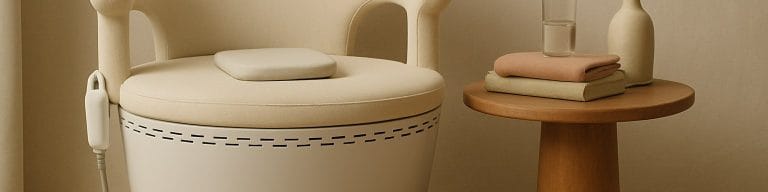
Each session lasts 28 minutes. You stay fully clothed. You sit down. The chair runs an electromagnetic sequence that triggers pelvic floor muscle contractions far more frequently than voluntary Kegels can match. You feel the contractions. They are firm but not aggressive. Most clients describe the sensation as strange on the first session and comfortable by the third. If anything ever feels wrong – sharp pain, pulling, anything that worries you – we stop the cycle immediately and reassess.
I keep the room calm during postpartum sessions. No phone-checking expected, no chat unless you want it. Some new mothers use the 28 minutes as a rare slot of stillness in a week of broken sleep. Some prefer to chat through how the recovery is going overall. Both are fine. The session belongs to you.
What This Chair Does Not Replace
This is the part I will not soften.
The pelvic floor chair after childbirth does not treat diagnosed pelvic organ prolapse. It does not resolve diastasis recti, which is a separate abdominal-wall recovery question best handled by a women’s health physiotherapist. It does not replace pelvic health physiotherapy if you have been referred to one. It does not substitute for ongoing GP care if you have postnatal incontinence symptoms that need investigation. It does not address scar tissue, c-section healing, abdominal-wall repair, or any other surgical recovery concern.
What it can offer, alongside that medical care, is a non-medical prophylactic strengthening option that supports the pelvic floor muscle tone work you are already doing under medical guidance. Think of it as a complement to the proper postpartum recovery plan, never as a replacement for any part of it.
If you read salon marketing that promises this chair will fix postpartum incontinence, resolve prolapse, replace your physio sessions, or substitute for the postnatal medical pathway, please walk away from that salon. That copy is reaching beyond what UK regulations allow non-medical providers to claim, and the consequences of acting on it can mean missed medical care that needed proper intervention.
How to Plan Sessions Around a Postpartum Schedule
New motherhood schedules are unpredictable. I plan postpartum pelvic floor courses with a wider tolerance for rescheduling than my general bookings. If a session needs to shift because of a feed, a sleep regression, a sudden nursery cancellation, or simply a day when leaving the house feels too much, we move the slot. No fees, no fuss.
Most postpartum clients book a course of six to eight sessions across roughly two months. The first session is shorter in spirit if not in time – we go through the settings, you see how your body responds, and we agree on whether the rhythm suits you before scheduling the rest. After the initial course, some clients move to monthly maintenance sessions, some pause completely, some build it into a longer rhythm alongside facials, and a few step away for several months and return at a later life stage. Whatever pattern fits your schedule and your recovery is the right one.
If you are still in early postnatal weeks and reading this with a sleeping baby on you, please save the page rather than book yet. Have your six-week check first. Speak to your GP or midwife. If they raise concerns or refer you to pelvic health physiotherapy, follow that pathway. Once your medical team is comfortable, that is the moment to message me. I will be here.
Questions & Answers
Ready to Discuss a Postpartum Plan?
Once you have GP or midwife clearance, book a 5-minute introductory pelvic floor session at the studio so we can see how your body responds. The first appointment is the calibration – no pressure to commit to a course until you know it suits you.
All treatments carried out by Maria at Skincare & Waxing, 10A Freckleton Street, Kirkham, Preston, PR4 2SP