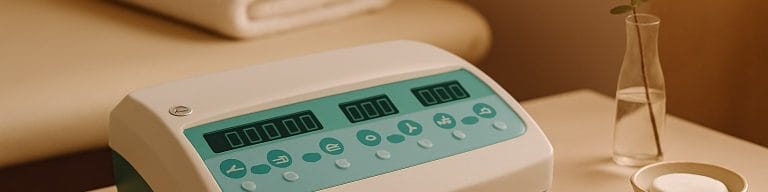

Dermalux LED, in plain words
If you have been researching dermalux led light therapy, you have probably seen a lot of marketing. Here is a quieter version: how I chose this brand, what it actually does in a session, and where it sits in good skin care.
What dermalux LED actually is, in plain terms
Light-emitting diode therapy uses specific wavelengths of light, applied to the skin at clinically calibrated doses, to stimulate gentle changes in skin cells. Different wavelengths do different things. Red light around 630-660nm is best understood for supporting cellular activity and a healthier-looking skin tone. Near-infrared around 830nm reaches deeper and is associated with calmer, less reactive skin. Blue light around 415nm tends to be used for skin that is prone to congestion. None of this is magic, and it does not replace anything else you are doing for your skin. It is a calibrated tool, used precisely.
Dermalux is a UK-developed LED system. It comes in several models for clinical use, and that is the brand I chose for my Kirkham studio. The reasons matter, because all LED is not the same.
Why I chose Dermalux specifically
I did not pick this LED at random. I compared several brands across the parameters that matter, things like irradiance, wavelength accuracy, and treatment-head consistency. I chose Dermalux because the clinical evidence behind it is well documented, the training course is thorough, and the support after purchase is what I would want from any equipment supplier.
The cheaper devices on the market often look similar on a brochure. They feel similar in the box. What they are not always similar at is delivering consistent, calibrated light at the wavelengths a session is supposed to deliver. With LED, close enough is not enough. The point of a clinical-grade unit is that the dose you receive matches the dose the protocol is built around.
I am also a believer in being trained properly on what I use. The Dermalux training takes the time to walk through the science, the protocols, and the contraindications, and the support team is reachable when I have a question about a specific case. That matters more than people realise.
What a session looks like in my Kirkham studio
A standalone dermalux led light therapy session at my studio is calm. You lie on the treatment couch. Eye protection goes on. The LED panel is positioned over the area being treated. The session itself is around twenty minutes, depending on the protocol we have agreed. There is no pain, no heat, no recovery time afterwards. You walk out, get on with your day.
What you will notice in the room is that I do not chat through the session. The lighting is low, the room stays quiet, and most clients close their eyes and rest. Several have told me it is the calmest twenty minutes in their week. Whether that is the LED or the silence, I will not pretend to know. Both probably help.
What dermalux led light therapy can support, honestly
I will not tell you LED removes wrinkles, cures redness, or treats any specific skin condition, because that is not how I am allowed to talk about cosmetic treatments, and not how I would want to talk about them anyway. What I can tell you is what I see in clients across a course of sessions, when the rest of their care is also doing the right thing.
Skin tends to look more even. Skin that has been reactive often calms. Skin that has been dull starts to look brighter. Fine lines may appear softer. None of this is dramatic in one session, and none of it lasts forever without ongoing care. It is a steady, supportive tool that earns its place in a wider skin-care plan.
How LED fits with the rest of my skin work
LED in isolation can do something. LED inside a wider skin-care approach does more. That is why most of my clients meet Dermalux LED inside a Bespoke Facial, where it is layered with cleansing, treatment, and Dermaviduals home-care guidance built around their specific skin. The LED is the supportive layer; the rest of the work is what makes the LED matter.
If you want LED on its own as a standalone series, that is also fine, and we can plan a course. I will be honest with you at consultation about which route makes more sense for what you are trying to achieve.
Before you book, the step that saves time on both sides
If you have been searching dermalux led light therapy and are not sure whether it is the right fit for what your skin needs, the cleanest first step is a short Skin Analysis appointment. Thirty pounds, one hour, no commitment. I look at your skin properly, we talk through what you have been doing, and we decide together where LED fits, or whether your skin would benefit more from a different starting point.
Questions & Answers
Want to talk through whether LED suits your skin?
If you are looking up dermalux led light therapy and want a calm, honest conversation about whether it is right for your skin, I would be happy to see you at my Kirkham studio. Book online below.
All treatments carried out by Maria at Skincare & Waxing, 10A Freckleton Street, Kirkham, Preston, PR4 2SP