The Two-Sentence Answer
Does fat freezing work? Yes, on the right body type and with realistic expectations – it reduces small, stubborn pockets of pinchable fat. It is not a weight-loss treatment, and the wrong candidate will not see the result they hoped for.
Does Fat Freezing Work? The Realistic Answer
Yes, fat freezing does work, but only on the right candidate and only with realistic expectations. The technology is well-established, the mechanism is documented, and the results are visible when the treatment is applied to the right kind of fat deposit. What it does not do is melt away substantial weight, reshape an entire body, or substitute for the slow honest work of nutrition and movement.
Controlled cooling targets pinchable subcutaneous fat – the kind you can squeeze between your fingers – and damages a percentage of the fat cells in the treatment area. Those damaged cells are gradually cleared by the body over several weeks, which produces a measurable reduction in the contour of the area. Most clients see between 10 and 25 percent reduction in the treated zone after a single session, with the full result becoming visible roughly six to twelve weeks after the appointment. That is the honest range I quote in my Kirkham studio.
If a salon promises 50 percent reduction in one session, dramatic body reshaping, or guaranteed inch loss everywhere you store fat, ask them what they are basing that on. Those numbers do not match what controlled cooling actually delivers, and acting on that promise is how clients end up disappointed in a perfectly functional procedure.
Who Fat Freezing Suits, and Who I Turn Away
Fat freezing suits clients with localised pinchable fat in stubborn areas – lower abdomen pouches, flank rolls, inner thigh pads, upper arm bands, and the occasional double chin. The candidate I see best results from is someone within roughly five to fifteen pounds of their stable weight, who has tried diet and movement on a specific area, and who simply has a stubborn pocket that does not budge regardless of effort.
I turn clients away from fat freezing more often than people expect. If your body fat is distributed evenly without a specific pinchable pocket, the procedure will not produce the result you imagine. If you are looking for weight loss, I will direct you to your GP or a registered nutritionist – not because fat freezing is harmful, but because it cannot do what you want it to do. If you have hernia history in the area, Raynaud’s, cold urticaria, or other circulation conditions, the procedure has formal contraindications and we will not run it.
My honest first question to anyone asking about fat freezing is simple. Where exactly is the area, how stable is your weight, and what have you already tried? If the answer fits the candidate profile, we book. If it does not, I tell you and we discuss alternatives without anyone losing time or money.
What Fat Freezing Cannot Do
This is the section most pricing pages skip because it sells fewer sessions. I include it because it stops disappointed bookings.
Fat freezing does not produce weight loss on the scale. The clearance of fat cells shifts contour, not body weight – the difference is visible in your clothes and in photos, but the bathroom scale will not move significantly from the procedure alone. It does not tighten loose skin in the treatment area; if your skin elasticity is already compromised, removing some underlying fat can make the loose-skin appearance more obvious rather than less. It does not replace healthy lifestyle habits; new fat stored in untreated cells will accumulate normally if your overall calorie and movement balance shifts. And it does not work on visceral fat, the deeper fat around internal organs, which only responds to overall metabolic change.
If you arrive with photos of dramatic before-and-after social-media results that promise to take you from a size 16 to a size 10 in a few sessions, I will tell you those results are misleading regardless of who posted them. The realistic visible change is a contour shift in a specific area, measured in centimetres rather than dress sizes.
How Many Sessions You Actually Need
Most areas need one to three sessions to reach the full visible result, but the gap between sessions matters. On the same area, I do not book a repeat session sooner than twelve weeks after the first. On a different area, the minimum is eight weeks after the first session, so your lymphatic system is not overloaded clearing dead fat cells from two zones at once. The reason for those gaps is biological: your body needs that window to clear the cells affected by the previous session before another round of controlled cooling adds more to the queue. Pushing sessions closer together does not speed up the result; it just stresses the area unnecessarily. Between sessions, I often invite clients to come back once a week for a pressotherapy lymph drainage step on its own – it is the same drainage suit you wear at the end of every cooling session, used as a stand-alone visit. Soft invite, not required.
In my Kirkham studio, the £60 single-area 80-minute session is the standard starting point for new clients. Two-area sessions at £90 across two hours work well when you want to treat, for example, both flanks in the same appointment. After the first session, we wait six to twelve weeks, take a fresh look at the area, and decide together whether a second session is worth doing.
Some clients are fully satisfied after one session and never book a second. Some complete two sessions on the same area and stop there. A small group runs three to four sessions over a year for cumulative refinement. And a few decide partway through that the result so far is enough and pause indefinitely. The right number is whatever matches the area, the candidate, and the realistic visible result you wanted from the start.
How to Decide If Fat Freezing Is Worth It for You
Honest decision framework. Pinch the area gently. If you can grip a clear pocket of fat between your fingers, the procedure has something to work with. If the area feels firm and there is nothing to pinch, fat freezing is not the right tool for that concern. Look at your overall weight stability. If your weight has been steady for at least six months, the result will hold longer. If you are still losing or gaining, wait until your weight settles before booking. Consider your timeline. Full visible results take six to twelve weeks – if you have a specific event in three weeks, fat freezing will not deliver in that window and we should plan around it.
If after that framework you still want to book, the next step is a brief consultation at the studio rather than a direct booking. Five minutes looking at the area in person tells me more than any photo, and tells you whether my honest recommendation is to proceed now, wait until your weight is more stable, skip altogether for a different approach, or simply revisit the question in a few months. That conversation costs nothing and prevents regrets in either direction.
Questions & Answers
Curious If Fat Freezing Suits You?
Book a brief consultation at the studio so we can look at the area honestly and decide together whether fat freezing is the right call. If it is not, I will say so and suggest a more sensible direction.
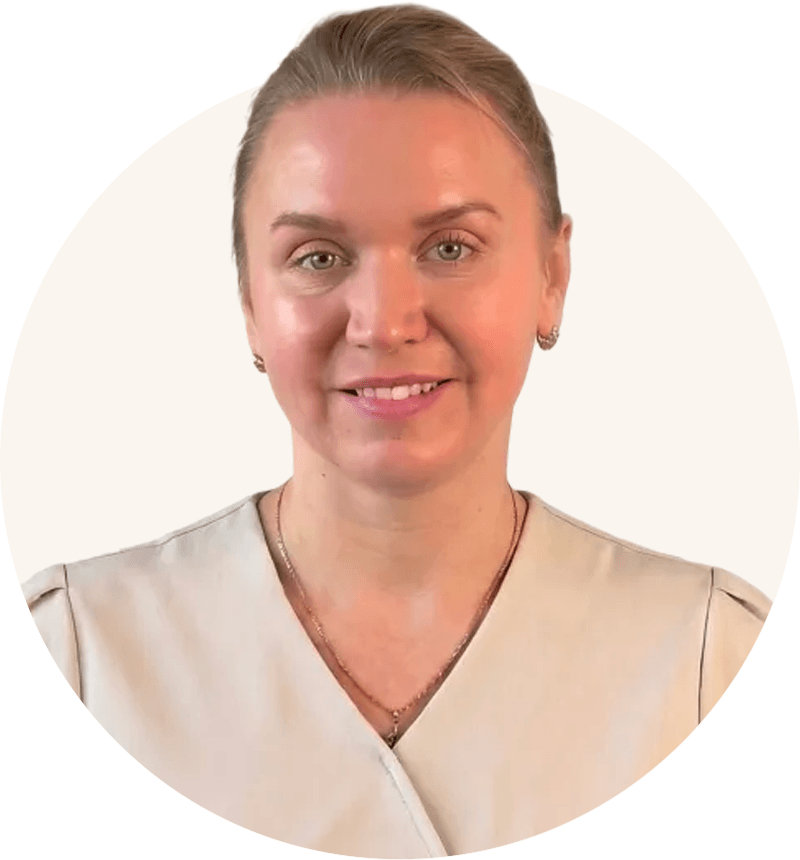
All treatments carried out by Maria at Skincare & Waxing, 10A Freckleton Street, Kirkham, Preston, PR4 2SP