
Blue LED for Acne-Prone Skin: An Honest Answer
If you have searched blue led light therapy hoping for a clean answer about acne-prone skin, the most useful one I can give is this. Blue LED is a supportive tool. It can help calmer-skin breakouts settle. It is not a substitute for a GP if your acne is severe or cystic. After twenty years working with skin, here is the version of the conversation I have with clients in the room.
What blue LED actually does, and what it does not
Blue LED light at around four hundred and fifteen nanometres has been studied in clinical settings for its action on the bacteria associated with mild non-inflammatory acne. The light is absorbed by porphyrins inside the bacteria, the bacteria become less viable, and over a course of sessions some clients see fewer small breakouts in the area treated. The clinical evidence base behind that effect is well documented for mild, non-inflammatory presentations.
What blue LED does not do is rebuild a damaged skin barrier, regulate hormonal cycles, dissolve cystic lesions, calm the immune response that drives them, or replace prescribed medication. If anyone offering you a course of blue led light therapy tells you it will fix your skin overnight, walk away. It is a supportive tool. It sits alongside good home care and, where appropriate, alongside what your GP has prescribed.
Who blue LED tends to suit in my Kirkham studio
The clients who get the most out of a blue LED course in my Kirkham studio share a few features. They have skin that breaks out in small clusters across the forehead, jaw, chest, or back rather than deep painful cysts. They are already using a gentle home routine that respects the barrier. They are willing to sit through a course of six to eight sessions over six to eight weeks before judging the result. And they are realistic about what supportive light therapy can and cannot deliver.
What I want any client searching blue led light therapy to know upfront is that the appearance of breakouts often calms gradually rather than disappearing in a week. If your skin is reactive, sometimes the first session or two looks worse before it looks calmer, as the surface flushes and the skin re-balances. That is normal and short-lived. I would rather warn you in advance than have you book session two thinking the treatment failed.
Who I refer to a GP first, before any LED
If your acne is moderate to severe, painful, cystic, or scarring, the right first step is your GP, not a beauty studio. The reasons are clinical, not commercial. Persistent or worsening acne can need topical or oral prescription, and starting LED on top of an unmanaged inflammatory presentation can mask what is happening rather than help it.
I would rather you spend the first appointment cost on a GP visit, get a clear plan from them, and then come to me afterwards if a supportive LED course makes sense alongside what they have prescribed. That is the route I would take for myself or someone in my own family. It is not me turning away the booking. It is me telling you the order that gives the best chance of a calmer skin within six months rather than a frustrated one.
How blue LED fits with the rest of the work
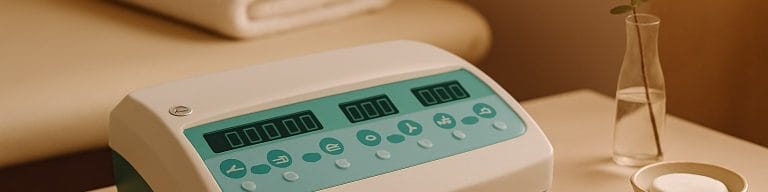
In my LED light therapy service the blue setting is rarely used in isolation. Most acne-prone skin also benefits from the calming wavelengths of red and near-infrared light in the same session, because the skin barrier under acne-prone surfaces is often quietly under-functioning. The combined session protocol takes around twenty to thirty minutes on the LED itself, sometimes shorter if we are pairing it with a gentle facial cleanse.
If you have not had a proper skin look-over before, the honest entry point is a Skin Analysis at thirty pounds. One hour, on the couch with proper lighting, where I look at what your skin is actually doing rather than what you have decided it is doing. That single session usually changes the home routine more than any course of LED ever would, and it tells me whether blue LED is the right tool to start with at all.
The home-routine truth that LED cannot fix
Half of the acne-prone skin that comes through my door has a home routine that is making the situation worse. Aggressive cleansers stripping the barrier. Spot-zapping products applied to whole-face daily. Foam scrubs used at night and an exfoliating toner used in the morning. The skin reads that as a constant attack and produces more oil, more redness, and more breakouts in response.
Blue LED in a single session a fortnight cannot out-perform two harsh products applied at home twice a day. So before any course starts, the first piece of work is calming the routine. Once the routine is gentle enough that the skin is not in survival mode, blue LED has something to support rather than something to fight against. That is the order in which it actually works.
Realistic timeline and what to expect from a course
A typical blue LED course is six to eight sessions, scheduled twice a week for three to four weeks. After that initial run, most clients move to a single maintenance session every two to four weeks for as long as the breakouts are still settling. I would rather you book one short course, see what your own skin does, and decide on the next step from data rather than commit to twelve sessions on the phone.
If after the first three or four sessions I do not think blue LED is doing what we hoped, I will tell you directly rather than keep selling sessions. None of this is magic, and the honest version of the work is built on noticing when something is not landing.
What an appointment with me looks like
You arrive. We talk for ten minutes about your skin history, what your routine looks like at home, and what you have already tried. Eye protection goes on. The Dermalux LED is positioned over the area being treated, the timer is set, and you lie still under the light for around twenty minutes with nothing else happening. The room stays quiet. You can close your eyes if you like.
Afterwards I share what I noticed about your skin during the session and adjust the home routine where it needs adjusting. The first session is a longer slot to include the consult. Subsequent sessions are shorter. None of this is unusual, and none of it is dramatic. The work is precise, the room is calm, and the conversation is honest.
Questions & Answers
Curious whether blue LED is right for your skin?
Book a Skin Analysis through Fresha first – thirty pounds, one hour, no commitment. We look at what your skin is actually doing, what your home routine is doing for it, and whether a blue LED course makes sense as the next step. If your acne is moderate or severe, I will send you to your GP before I book the course. The right answer matters more than the booking.
All treatments carried out by Maria at Skincare & Waxing, 10A Freckleton Street, Kirkham, Preston, PR4 2SP