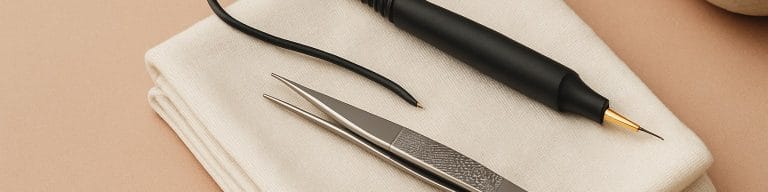

Electrolysis without the marketing
If you have asked ‘what is electrolysis’ lately, you have probably found a mix of slick clinic copy and vague forum threads. Here is the honest version - what electrolysis actually is, what it can do, what it cannot, and how I work with it at my Kirkham studio.
What Is Electrolysis? The Short Honest Answer
Electrolysis is a precision hair-removal technique that uses a fine probe inserted alongside the hair into the existing follicle, then a small electrical current to disrupt the cells responsible for regrowing that specific hair. One follicle at a time, by hand, with the practitioner watching what is happening on the skin throughout. It is the original long-term hair removal method, predating laser by several decades, and it remains the only hair removal technique recognised in the UK as capable of producing permanent results when carried out correctly across a full course.
‘When carried out correctly across a full course’ is the part most marketing skips. Electrolysis is patient work. It is not a magic-wand session. The honest version is below.
I use electrolysis when an area is small and the hairs are scattered. A few stubborn hairs on the chin. A patch on the upper lip that keeps coming back finer but never disappearing. Hairs around the nipple. Stray hairs on the bridge of the nose or between the brows. Toes and fingers. Eyebrow shaping where you want a hair gone for good rather than tweezed every two weeks.
How Electrolysis Actually Works (Without the Salon Brochure)
The probe is so fine it follows the natural opening of the hair follicle - it does not pierce skin in the way a needle would. Once it is in place, a controlled low-energy electrical current is applied for a fraction of a second. That current chemically and thermally disrupts the small group of cells at the base of the follicle that are responsible for regrowing the hair. The treated hair then comes away easily, and the follicle that produced it is unable to regrow it.
Three things are worth understanding clearly. First: only hairs in active growth phase respond well, which means a course is needed to catch each follicle in the right phase. Second: skin-tone, hair colour, and hair coarseness do not affect whether electrolysis works the way they affect laser. Third: the practitioner’s hand and eye matter enormously - this is hand-work, not button-pressing.
Why Electrolysis Is Sometimes Called Permanent - and What That Really Means
Electrolysis is the only hair-removal method recognised in the UK as capable of permanent results when a full course is completed correctly. That is the honest framing. It does not mean every hair you ever grew in that area is gone after one session. It means that the specific follicles successfully treated do not regrow that hair.
What that translates into in practice: a treated area generally needs multiple sessions over months, sometimes longer for larger areas, to catch each follicle in active phase. Hormonal changes can also stimulate dormant follicles to wake up later in life - which is why even a fully completed course does not guarantee zero hair forever in every scenario. Realistic expectations are part of what makes the result feel worthwhile.
How Long Does an Electrolysis Course Actually Take?
For a small area like the upper lip or chin, expect a series of short sessions spaced a few weeks apart over several months. For larger areas or denser hair, the timeline lengthens accordingly. Most clients see meaningful change inside the first few sessions and continued improvement as the course progresses. Session prices are on my electrolysis price list.
I do not sell pre-paid courses for electrolysis. We book session by session, you assess progress with me as we go, and you stop when the result is where you wanted it. If you would rather see waxing as a faster option for an area where electrolysis is overkill, I will tell you that too.
What an Electrolysis Session Feels Like in My Kirkham Studio
You lie down for the session. I work under a bright magnifying lamp with the probe in one hand and the other hand steadying the skin. Each follicle treatment takes a fraction of a second. Most clients describe the sensation as a brief warm prickle - present but manageable, especially with a few minutes of preparation before the session. Some find it easier than they expected; some find it firmer than waxing on the same area. Both reactions are normal.
Sessions are timed by minutes rather than by ‘a full area in one go’. We work through the area systematically, take pauses if needed, and stop at the time booked. Aftercare is simple - the treated area can look slightly pink for a few hours, sometimes the following day, but settles cleanly when looked after. Everything about the service itself is on my page for electrolysis hair removal in Kirkham.
Electrolysis vs Laser vs Waxing - Where Each One Fits
Three different tools for three different jobs. Waxing is fast, comfortable for many people, and gives smooth skin for several weeks - but the hair regrows. Laser works best on darker, coarser hair against lighter skin and reduces overall density across larger areas - but it is not effective on every hair colour and is not classed as permanent in the UK regulatory framework. Electrolysis is slower, more precise, and the only UK-recognised permanent option - but it requires patience and a course commitment.
For a small persistent patch, electrolysis often makes the most sense. For a full-leg removal, waxing is usually the practical pick. For dense growth across larger areas in suitable skin/hair combinations, laser may be worth a consultation elsewhere. I will tell you honestly which fits your situation, even if the answer is ‘go elsewhere for that part’.
Aftercare and Between Sessions
The treated area will look slightly red and a little raised for a few hours, sometimes longer on more sensitive zones. Tiny scabs may form over individual follicles by the next day. They are protective and they fall off on their own within a week. Picking at them slows healing and can leave a mark, so leave them be.
For the first 24 to 48 hours after a session keep the area cool and clean. No makeup directly on treated skin for a day. No hot bath, sauna, sunbed, or vigorous exercise that day. No swimming pool that day. Use a gentle cleanser and a calm moisturiser. SPF on any treated area exposed to daylight, every day, no exceptions, particularly while the skin is recovering.
Between sessions, do not pluck or wax the treated area. The follicle needs to be intact and the hair needs to be visible at the surface for me to work in the next visit. You can shave or trim if hair growth is bothering you between appointments, that does not interfere with the treatment.
What Electrolysis Will Not Do (And What I Tell My Clients)
I am not going to tell you electrolysis changed someone’s life. Clients do not actually come back and report on the rest of their lives. I do not know what shifted at home. What I do see is this: they start hiding the spot less. That is the honest version.
If you came across a skin consultation or any electrolysis information online promising you some big external shift after a course - the kind of language those slick marketing pages reach for - treat it as marketing rather than a service description. The actual outcome is quieter and worth more for being so. A patch you used to feel self-conscious about, less self-conscious. That is what I can offer, and that is what I deliver.
Questions & Answers
Want to talk through whether electrolysis is right for you?
If you are weighing up what electrolysis can and cannot do for the area you have in mind, the most useful first step is a short conversation. Book a session online when you are ready, or message me first if you would rather talk it through - I would rather have an honest five-minute chat than book you in for the wrong tool.
All treatments carried out by Maria at Skincare & Waxing, 10A Freckleton Street, Kirkham, Preston, PR4 2SP